I
Catalogue entry
The Specimen
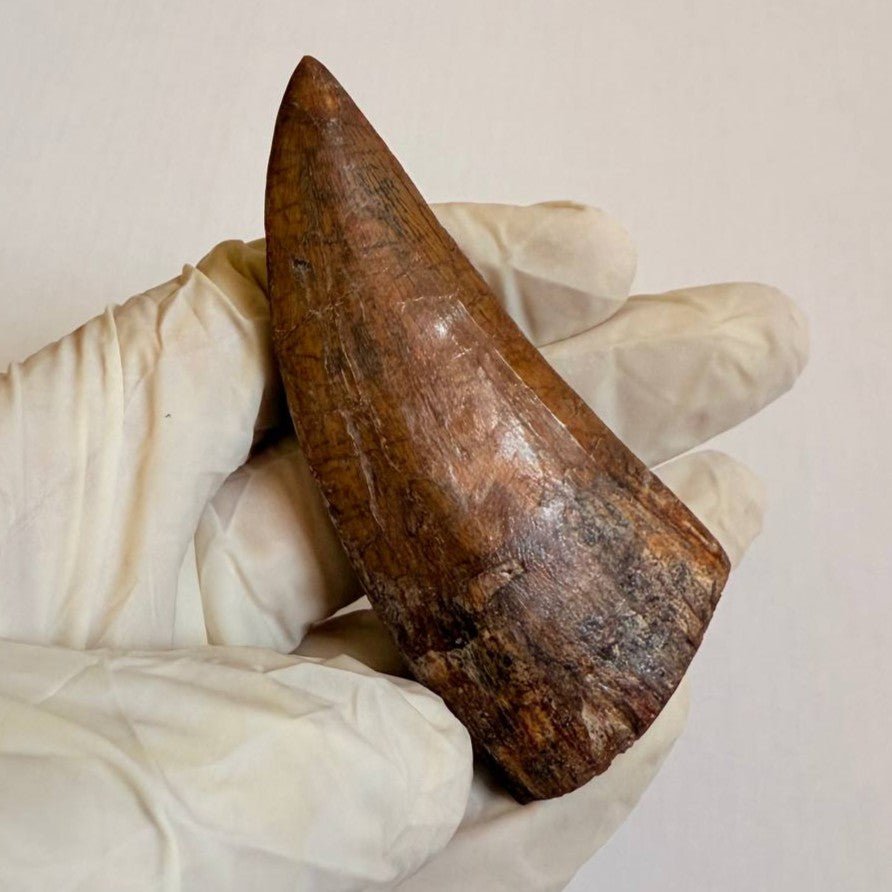
🦷 ORIGINAL 11.0 CM SPINOSAURUS TOOTH
This is a fossil tooth of Spinosaurus aegyptiacus, a large theropod dinosaur, measuring 11.0 cm (approximately 4.3 inches) in length. It comes from the Kem Kem Beds of Morocco and dates to the Cretaceous Period, roughly 112–97 million years old. The tooth shows the straight, conical form typical of the genus.
🔎 Fossil Information
- Fossil type: Dinosaur tooth
- Identification: Spinosaurus aegyptiacus
- Length: 11.0 cm / approximately 4.3 inches
- Period: Cretaceous
- Age: 112–97 million years old (Cretaceous)
- Locality: Kem Kem Beds, NW Sahara Desert, Morocco
- Condition: Complete; the source notes a single repair and crack-filling near the tip
- Availability: One exact photographed specimen
- PaleoDeserts reference: SP-23
🌍 About Spinosaurus
Spinosaurus aegyptiacus was a large theropod dinosaur from the mid-Cretaceous of North Africa, around 100 million years ago. Its fossils are known above all from the Kem Kem Group of southeastern Morocco, a series of ancient river deposits. Its long snout carried straight, conical teeth suited to catching slippery prey such as fish, and it is regarded as one of the longest carnivorous dinosaurs known.
📷 Exact Specimen
Only one specimen is available. You will receive the exact tooth shown in the photographs.
II
Where it comes from
Moroccan Origin
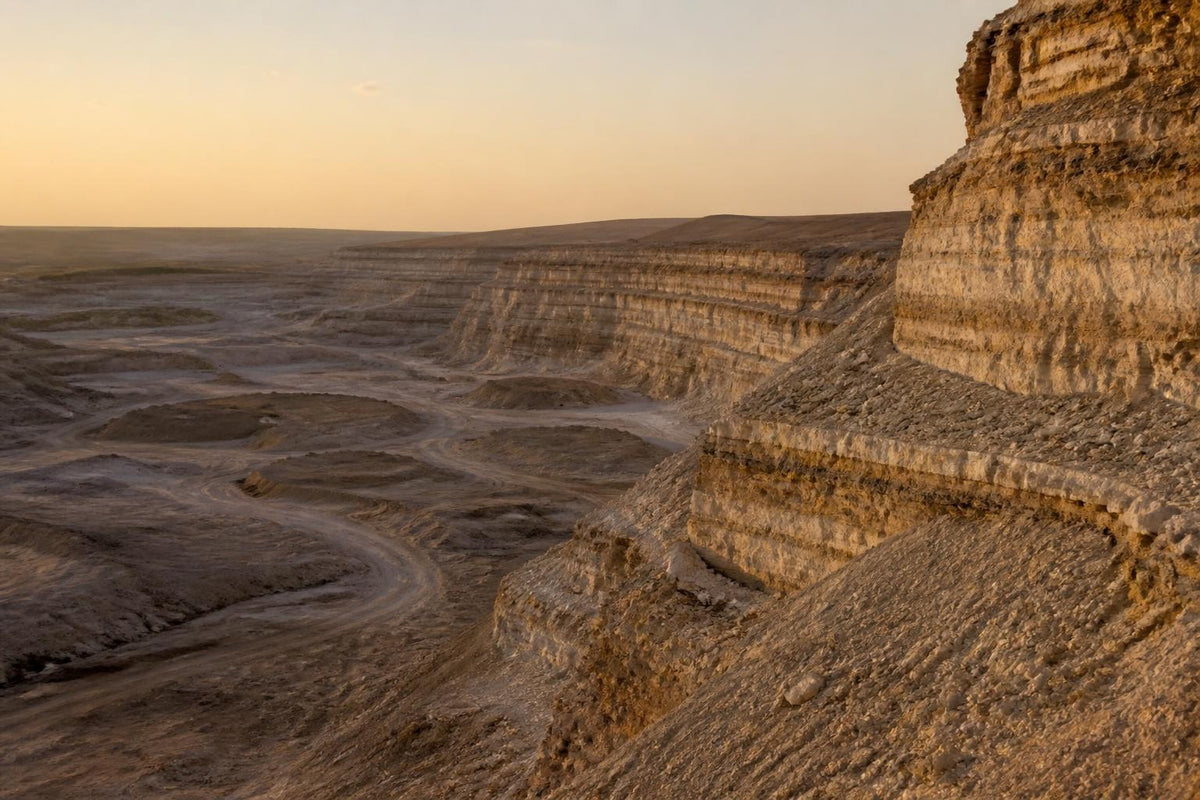
The Kem Kem beds of south-eastern Morocco are river and delta deposits from the Cenomanian, the first stage of the Late Cretaceous, roughly 100 million years ago.
They preserve an unusual ecosystem dominated by large predators, including Spinosaurus and Carcharodontosaurus, alongside pterosaurs, crocodile relatives and giant fish.
Reported locality for this specimen: Kem Kem Beds, NW Sahara Desert, Morocco.
III
From the rock
Discovery
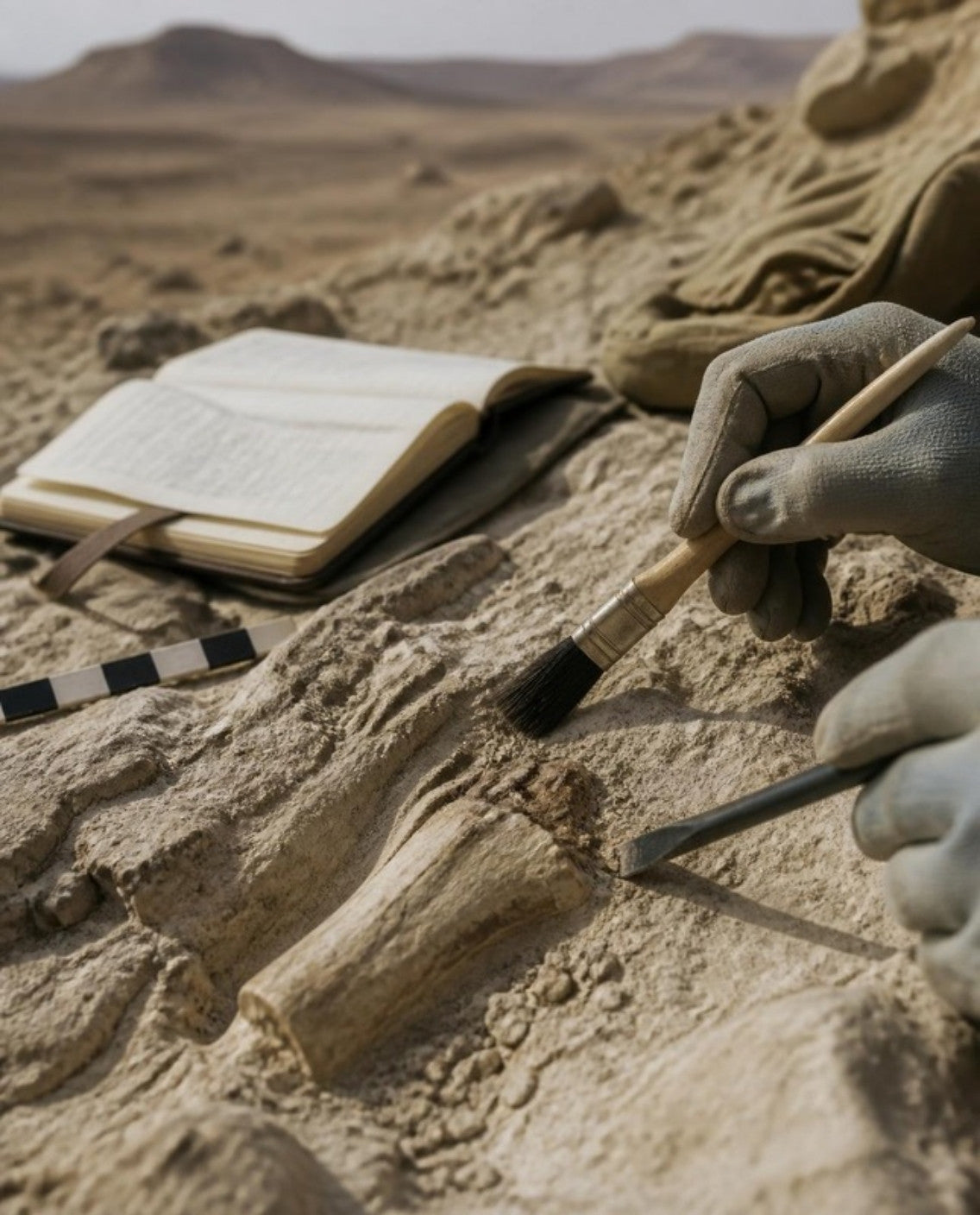
In the Kem Kem, fossils are usually found as isolated teeth and bones. Ancient rivers scattered remains before burial, which is why complete skeletons are exceptionally rare.
Large predatory dinosaurs shed and replaced teeth throughout their lives, so their hard, enamel-covered teeth are the fossils most often recovered.
IV
Deep time
Geological Context
The Kem Kem Group, made of the Gara Sbaa and Douira formations, records a Cenomanian river system roughly 100 million years old.
- Period
- Cretaceous
- Locality
- Kem Kem Beds, NW Sahara Desert, Morocco
- Deposit
- Kem Kem Group
V
The workshop
Preparation
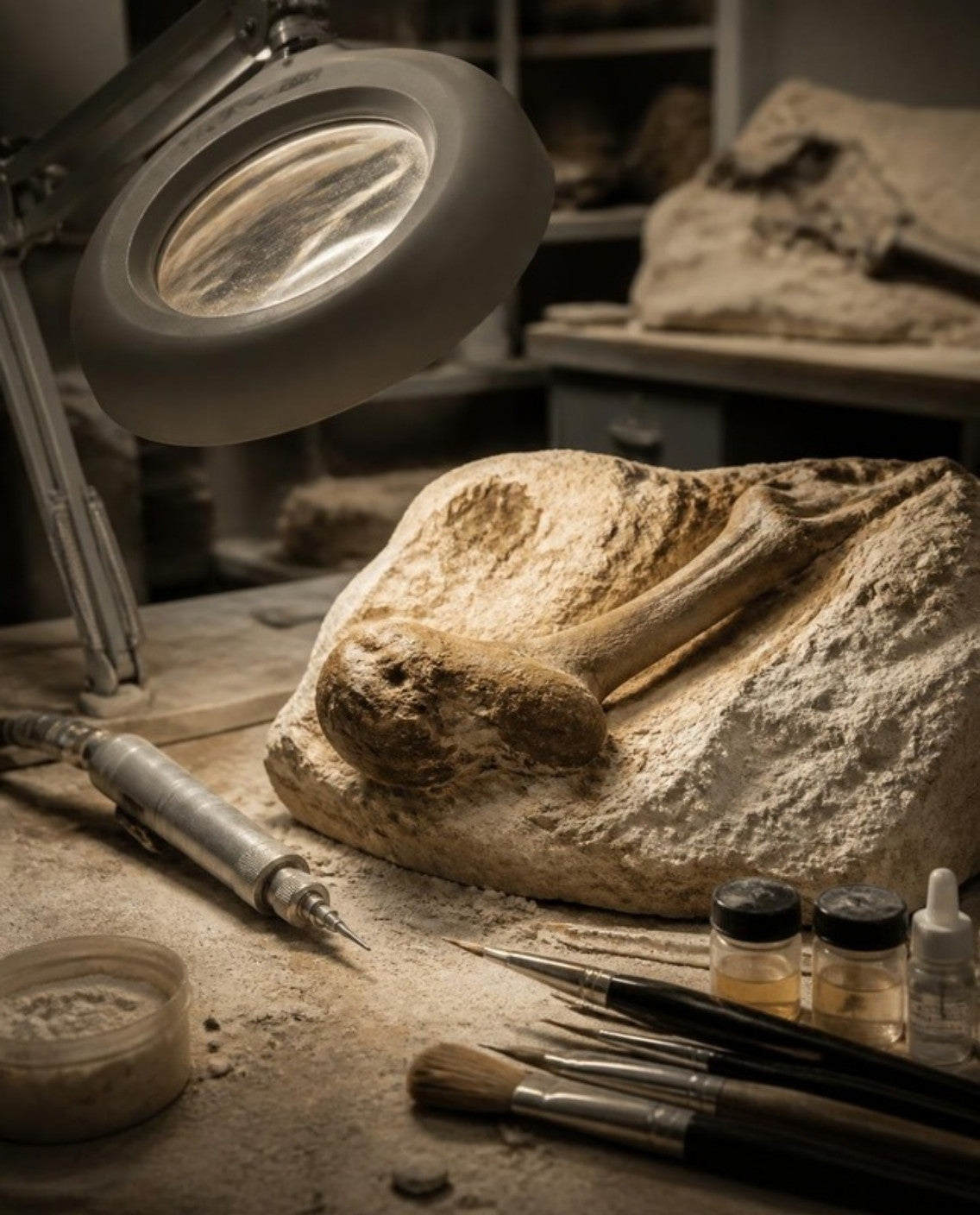
Fossils are freed from their surrounding rock with fine air-powered tools, abrasives, brushes and consolidants. Depending on size and fragility, preparation can take from a few hours to several months.
The preparation, association, repair and restoration information supplied for this specimen is listed below, exactly as recorded in its catalogue entry.
- Condition
- Complete; the source notes a single repair and crack-filling near the tip
VI
On display
Presentation

Presented as a natural-history specimen, this fossil is suited to a private collection, a gallery, a library or a carefully designed interior.
This listing describes one individual specimen. You will receive the exact fossil shown in the photographs.
For display, choose a stable surface away from strong direct sunlight and humidity. Our care guide explains how to clean, handle and present a fossil.
VII
For the collector
Collector Information
The Kem Kem bedsSpinosaurus vs CarcharodontosaurusFAQAll Fossil Guides
Continue the exhibition